Thanks to the Induction Cookware, the concept of Induction is now d well known
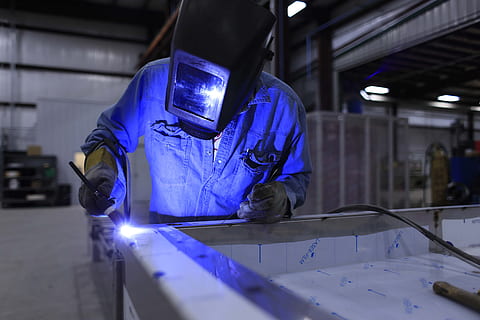
TIG welding has a new, accelerated and a highly-efficient process, and its aptly called SWAT – Sigma Weld Accelerated Tig.
Shrink fitting is a commonly used method for installing bearings on shafts or in housings. In this method, the bearing is heated to a high temperature and then cooled,
Each company wants to be able to make the most of the resources available to them. Often when out of turn orders are expected or a sudden surge in volume is likely to hit after a lean patch, the first reaction is to increase capacity, increase productivity at any cost.

The SigmaWeld Induction Heating Solution is an excellent example of how innovative technologies can revolutionize traditional manufacturing processes, resulting in increased productivity, reduced costs, and improved product quality. By adopting cutting-edge technologies like induction heating, manufacturers can stay competitive and stay ahead of the curve in today's fast-paced manufacturing industry.
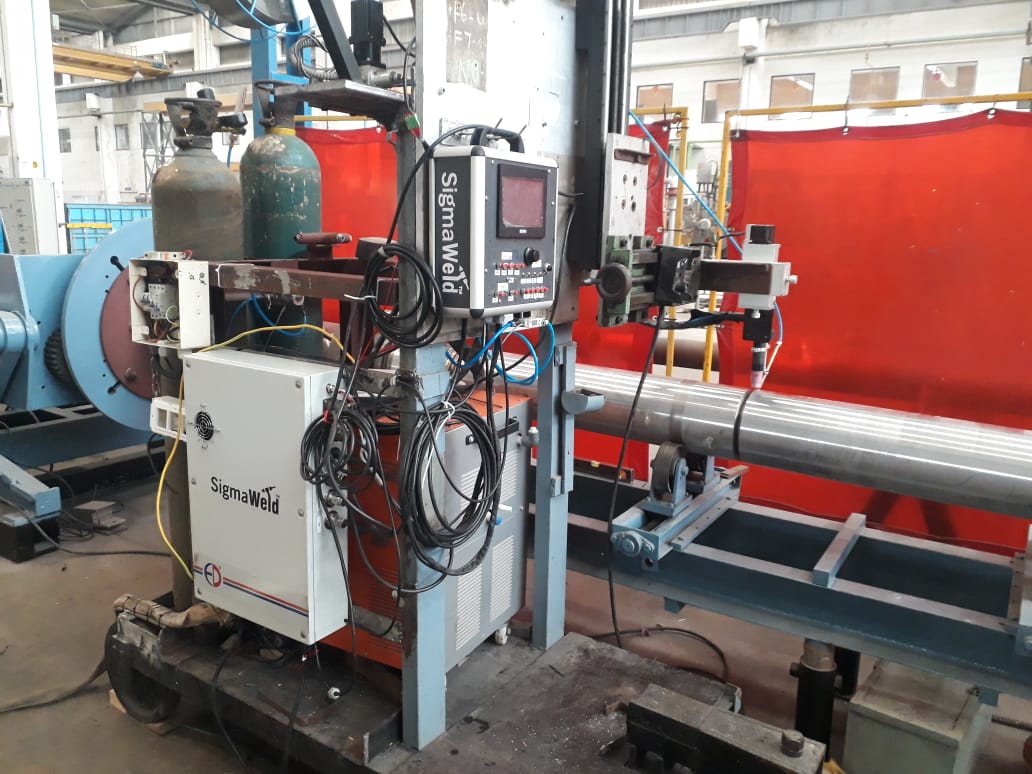
EDWPL established full fledged welding automation division with design team based out of Pune office and execution team in Mumbai and Umbergoan. Having years of expertise in material handling and automation for induction heating , induction sealing and packaging automation, this was a natural expansion possible.
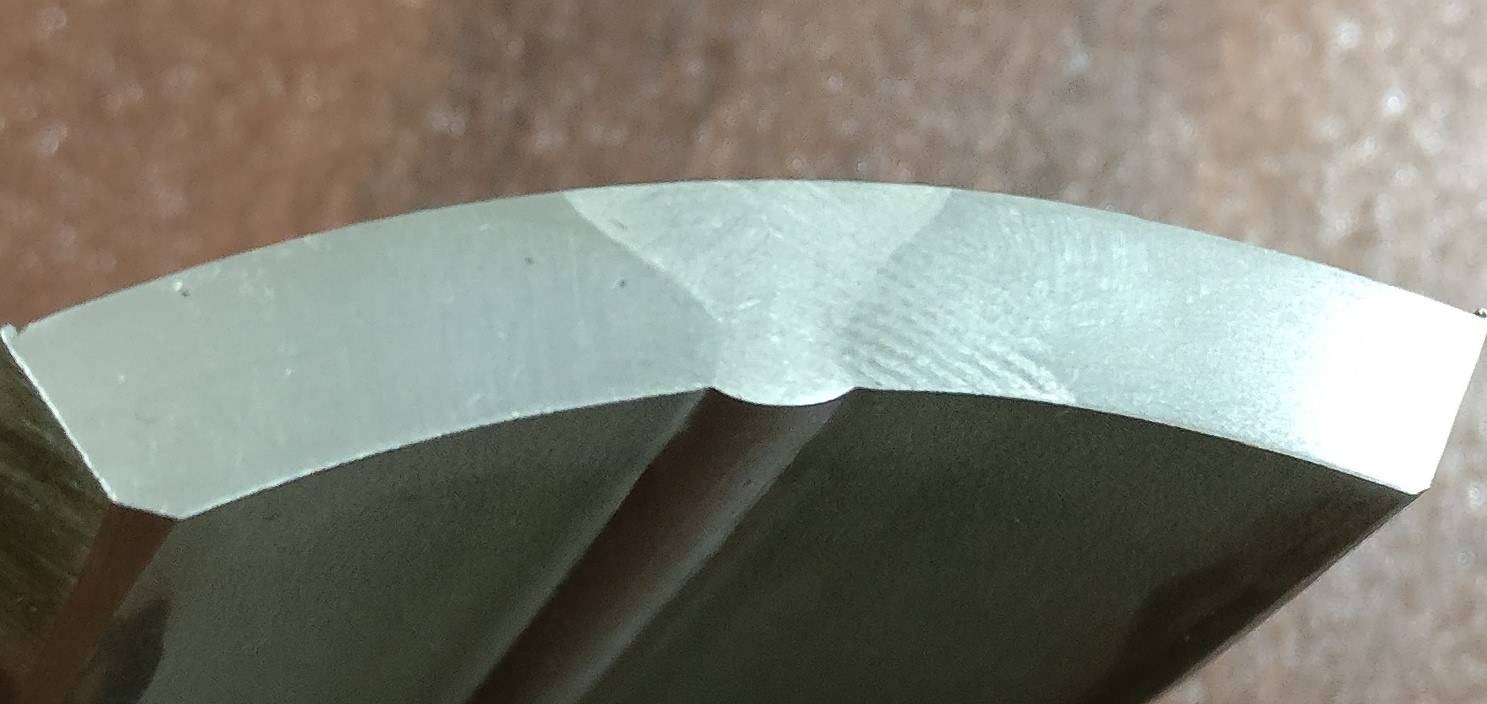
Welding is a process of joining two or more metals through heat and pressure. The Tungsten Inert Gas (TIG) welding process is a popular welding method used to join metals that require high precision and accuracy. TIG welding involves using an electrode made of tungsten to create an electric arc, which generates heat to melt the metal.
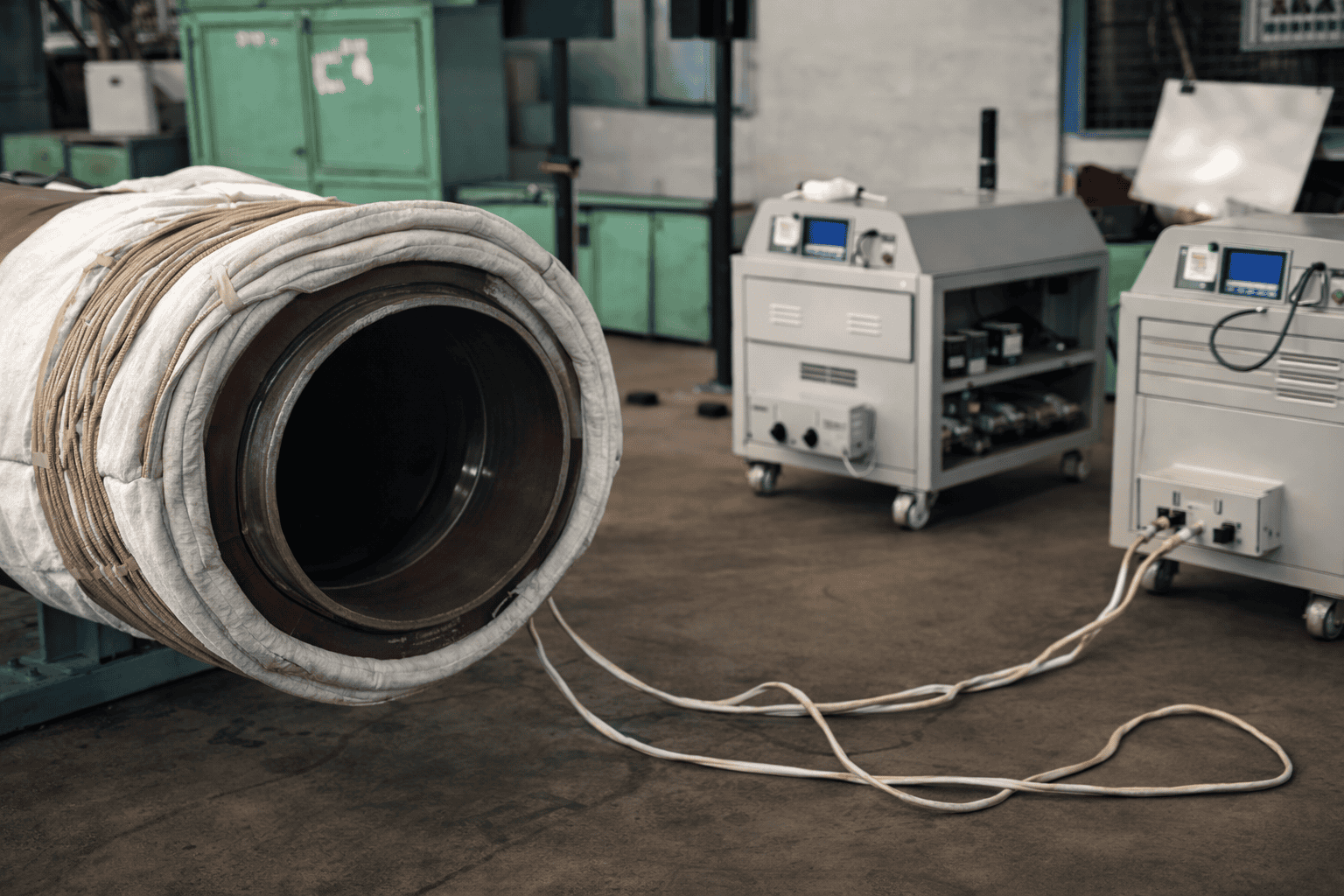
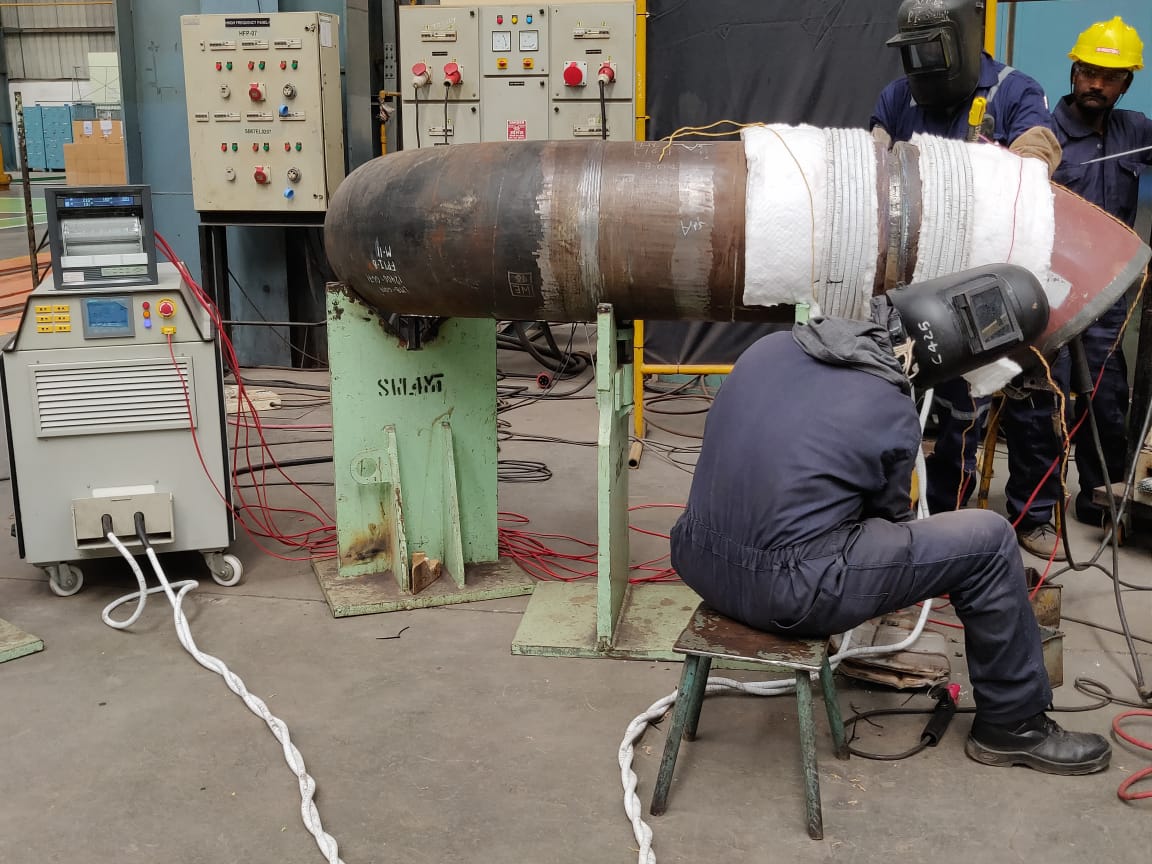
This article explains the advantages of induction heating for pre-weld and post-weld heat treatment, including improved efficiency, uniform temperature control, enhanced safety, and reduced operating costs compared to traditional gas heating methods.
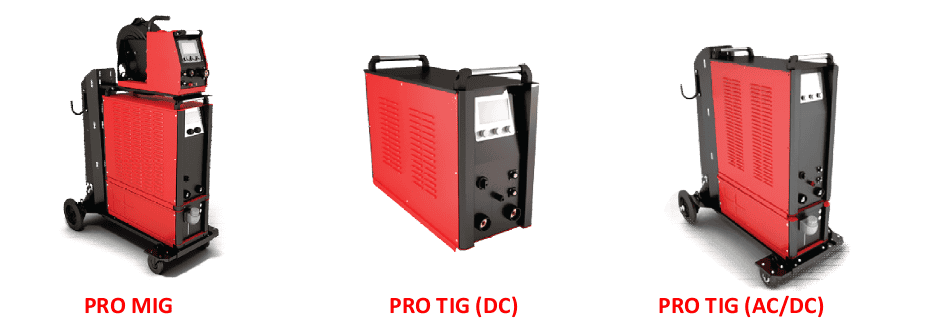
This article explains the advantages of induction heating for pre-weld and post-weld heat treatment, including improved efficiency, uniform temperature control, enhanced safety, and reduced operating costs compared to traditional gas heating methods.
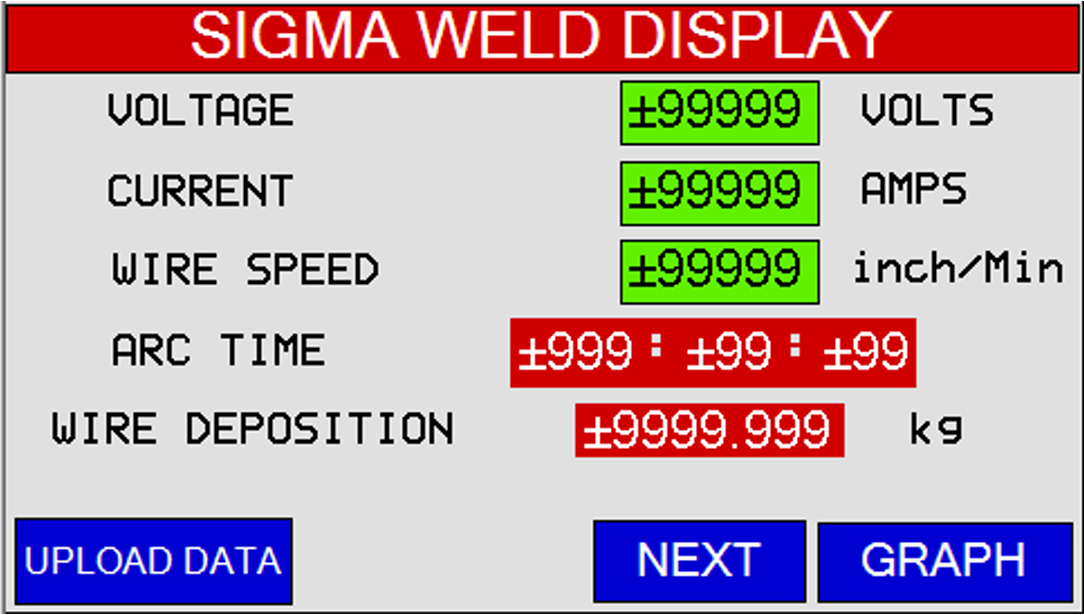
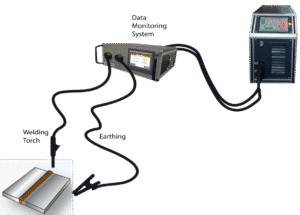
This article explains the benefits of a Welding Data Monitoring System (DMS) for real-time tracking and analysis of welding operations, including parameter logging, machine utilization monitoring, welder performance tracking, heat input calculation, and improved WPS compliance for enhanced productivity and process transparency.
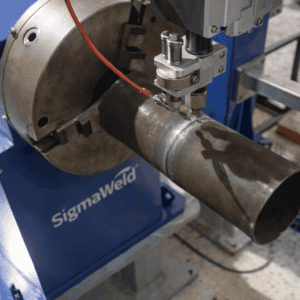
This article explains the advantages of automated GTAW systems incorporating Automatic Voltage Control (AVC), torch weaving, and cold wire feeders, including improved arc stability, consistent weld penetration, higher welding speeds, enhanced deposition rates, and repeatable X-ray quality welds for critical industrial applications.
This article explains the emerging trends shaping the welding and induction heating industry, including increased productivity in GTAW processes, adoption of automation and robotics, keyhole welding advancements, induction-based heat treatment solutions, Industry 4.0 integration, and data-driven monitoring systems for improved quality, efficiency, and cost optimization.
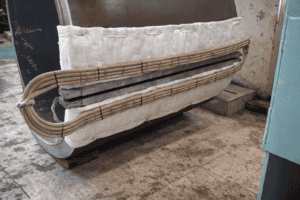
This article explains the comparative advantages of induction heating over resistance heating, including reduced setup time, faster heating cycles, significantly lower power consumption, improved temperature uniformity, enhanced process control, and substantial long-term operational cost savings in industrial pre-heat and post-heat applications.
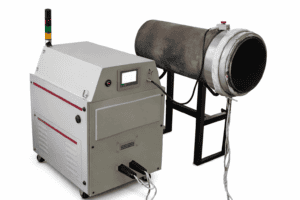
This article explains the advantages of the Sigma Therm IH system for pre-weld and post-weld heat treatment, including faster setup time, precise digital temperature control, programmable heating cycles, uniform heat distribution, reduced operational costs, enhanced safety compared to gas heating, and improved process reliability for industrial piping and heavy fabrication applications.
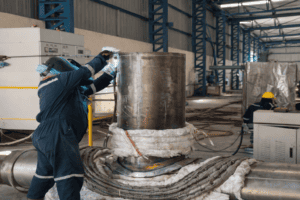
This case study explains the advantages of integrating induction preheating with SWAT automated welding, including significantly reduced heating time, up to 93% energy savings, improved temperature uniformity (±5°C), lower power consumption, reduced rework, enhanced weld consistency, and substantial cost savings for heavy fabrication applications.
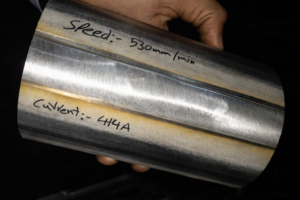
This article explains the advantages of the SigmaWeld Accelerated TIG (S.W.A.T) process, including single-pass welding without edge preparation, significantly higher welding speeds, reduced gas consumption, lower filler wire usage, improved productivity, and consistent X-ray quality welds for stainless steel, alloy steel, titanium, and nickel alloy applications.